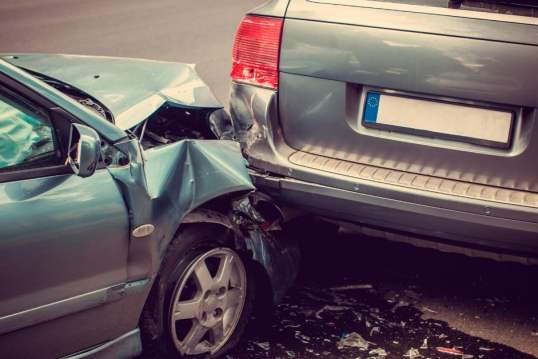
Holiday travel in Las Vegas brings a surge of vehicles onto I-15 and US-95, two highways that are already among the busiest corridors in Nevada. Visitors driving in from other states, locals heading to family gatherings, and tourists moving between hotels and casinos all merge into the same fast-moving, unpredictable traffic. If just one of these drivers breaks a traffic law or drives negligently, they could trigger a chain reaction crash involving multiple vehicles.
These multi-car pileups are far more complex than standard two-vehicle crashes. Drivers may experience multiple impacts, rental vehicles are often involved, and injured people may not know who hit them first or how many cars contributed to the crash. These factors make liability and insurance considerations much more complicated.
At the Cottle Firm, our dedicated Las Vegas car accident lawyers have extensive experience in all types of motor vehicle accident claims, including multi-vehicle pileups. If you’ve recently been injured in one of these crashes, we’re prepared to evaluate your case and help you seek financial compensation from all negligent parties. Contact us today at 702-722-6111 to discuss your case in a free consultation.
Nevada’s Comparative Negligence Rules in Holiday Pileups
Holiday pileups on I-15 and US-95 often involve more than one driver making a mistake. Nevada’s comparative negligence law governs how compensation works when fault is divided among several people. This becomes especially important in chain-reaction crashes where the sequence is not immediately clear.
Under Nevada law, an injured person can recover damages as long as they are less than 51% at fault. That sounds straightforward, but the practical application can be complicated in multi-vehicle crashes. Insurers often take the position that if several drivers were involved, then several drivers must share the blame.
However, comparative negligence doesn’t mean that fault is automatically split among everyone. A careful reconstruction may reveal that only one driver, or just a few, were responsible for the crash. The challenge in these cases is distinguishing between drivers who contributed to the crash and drivers who were simply caught in it.
Unique to Nevada’s comparative negligence law, passengers must only prove that they were injured due to the fault of one or more drivers. A passenger may recover 100% of their damages from any driver who is at least one percent at fault. Accordingly, even if the passenger’s own driver shares some responsibility, so long as another driver is at least one percent at fault, the passenger may seek full recovery from any at-fault driver.
How Fault is Assigned in Multi-Vehicle Accidents
Determining fault after a multi-vehicle crash is rarely a simple matter of pointing to the car that made the first impact. When several vehicles collide within seconds of each other, the real question becomes who created the danger, who escalated it, and who had no realistic chance to avoid it.
Investigators look closely at the facts, starting with the trigger event and then mapping the chain of impacts across each lane. A driver who swerves abruptly, loses control at high speed, or merges into an unsafe gap may be responsible for setting everything in motion. By contrast, a motorist who gets hit and pushed into another lane may have had no reasonable opportunity to avoid becoming part of the pileup.
In these cases, several factors go into determining who is responsible:
- What triggered the initial disturbance? (e.g., sudden lane change, loss of control, unsafe merge, etc.)
- How did the crash spread? (across lanes, into the shoulder, through stopped traffic, etc.)
- What were the conditions around each driver? (lane position, speed, space to react, etc.)
- Did any driver have a reasonable chance to avoid impact?
An experienced Las Vegas car accident lawyer can help determine who is at fault by analyzing crash diagrams, vehicle data, witness interviews, roadway layout, traffic camera footage of the crash, and other evidence.
Evidence in Highway Pileup Injury Claims
The strength of a multi-vehicle accident claim often comes down to how well the evidence clarifies the sequence of events. The more accurately a crash can be reconstructed, the harder it is for insurers to shift blame or dispute injuries.
Vehicle Positioning, Skid Marks, and Crash Diagrams
Crash scene documentation helps form the backbone of the reconstruction. Investigators and reconstruction experts look at factors like:
- Final vehicle positions across lanes, shoulders, and medians
- Skid marks and yaw patterns showing braking, swerving, or loss of control
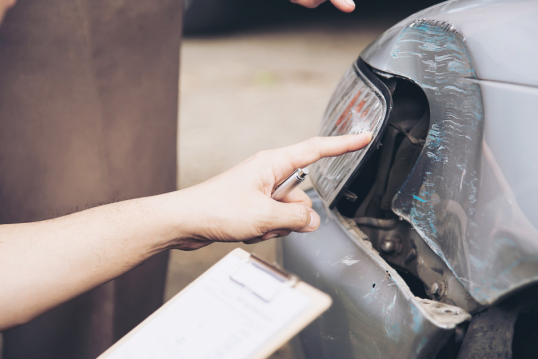
- Impact points on each vehicle to map the order of collisions
These details show how the crash progressed and help identify whether a driver was reacting reasonably or contributed to the accident.
Electronic Data Recorders (EDR)
Modern vehicles store key pre-crash information in their onboard computers. EDR downloads can reveal:
- Speed in the moments before impact
- Throttle and braking data
- Steering inputs
- Whether the driver was accelerating or decelerating
- The severity of each impact
In multi-vehicle crashes, this data is often the clearest way to separate unavoidable impacts from negligent driving.
Dashcam and Traffic Cam Footage
Dashcams often capture the exact sequence of impacts. Even a few seconds of video can show which car initiated the pileup, where the first loss of control occurred, and how the crash cascaded into other lanes.
Las Vegas traffic cameras sometimes offer helpful visual context. They may show the traffic density, flow, and conditions immediately before the crash.
Witness Statements
Witness testimony can help fill gaps in physical evidence. Witnesses may be able to provide additional details if they saw the crash from another angle. They may be able to identify the vehicle that triggered the crash, describe evasive actions taken by other drivers, or confirm the presence of a “phantom” driver who caused the crash and then fled.
Medical Documentation
Proving injuries in a multi-impact crash requires medical records and an injury timeline. Doctors and insurance adjusters look closely at the following factors:
- When symptoms first appeared
- How injuries evolved over hours or days
- Which types of forces are consistent with the reported pain
- Whether the damage was compounded by multiple impacts
In chain-reaction crashes, many people experience two or more distinct impacts. Whiplash, concussions, back injuries, shoulder injuries, and other injuries often worsen with each collision. Establishing the timing and cause of each injury helps counter insurer arguments that the pain came from a different impact or a preexisting condition.
Insurance Issues Unique to Highway Pileup Cases
Holiday traffic on I-15 and US-95 is a mix of locals, tourists, rental cars, commercial trucks, and rideshare vehicles – all covered by different insurance policies with different limits. When a multi-vehicle crash happens, these layers of insurance make payouts more complicated. Here are some key insurance considerations if you’ve been involved in a Las Vegas pileup accident.
Liability Limits Get Exhausted Quickly
In a two-vehicle crash, one liability policy might be enough to cover a single injured person. But in a pileup with several vehicles, the at-fault driver’s coverage can be exhausted quickly. Nevada’s minimum motor vehicle liability insurance is only $25,000 per person/$50,000 per accident, which can be claimed almost immediately by the first injured parties to file.
This means victims often face policy limits that don’t come close to covering medical bills. Multiple claimants might be fighting for a share of the same limited pool. Insurance companies may offer quick, low settlements to close out claims before the injuries fully develop. This is why you should contact a lawyer as soon as possible if you were involved in a multi-vehicle crash that wasn’t your fault.
Stacking UM/UIM Coverage to Fill the Gaps
Once liability coverage is gone, many victims turn to their own Uninsured/Underinsured Motorist (UM/UIM) coverage. Nevada allows insurance stacking in some situations, depending on the policy language and the number of vehicles insured under the same plan.
Insurance stacking can mean:
- Combining UM/UIM coverage from multiple vehicles on one policy
- Using separate household policies to increase available coverage
- Accessing policies covering other cars that the injured person regularly uses
When one driver’s minimum limits may be divided across several injured drivers, stacked UM/UIM coverage often becomes the only way to secure full financial compensation.
Med-Pay Coverage as Immediate Support
Medical coverage payments (“med-pay”) are among the most underused resources after a pileup. It pays for medical treatment regardless of fault, which makes it invaluable before liability issues are sorted out. Med-pay can help with emergency room care, diagnostic imaging, early specialist visits, and follow-up treatment before settlement. Because med-pay doesn’t affect UM/UIM eligibility, it can be used to bridge the financial gap while the case develops.
Special Issues with Rental Cars and Tourist Drivers
Las Vegas traffic is full of rental vehicles, which complicates insurance coverage when an accident involving a rental car occurs. Depending on the situation, coverage may come from:
- The renter’s personal auto insurance policy
- The rental company’s liability policy
- Supplemental liability purchased at the counter
- Credit card coverage for damage waivers
- UM/UIM from the renter’s home state policy
Sorting out which rules apply requires a careful review by an experienced Las Vegas car accident lawyer.
How Our Las Vegas Car Accident Lawyers Can Help
Highway pileup accident claims are extremely complex. While you’re dealing with pain, a damaged vehicle, and the shock of what happened, insurers are already sorting through claims and looking for any reason to downplay yours. Our job is to step in early, preserve evidence before it disappears, and build the strongest possible claim under Nevada law.
We Move Quickly to Secure and Preserve Key Evidence
In major pileups, vehicles are often towed off the highway within minutes, and critical evidence can vanish quickly. Our team works to:
- Obtain EDR data before the vehicle is repaired, salvaged, or scrapped
- Collect dashcam footage from you and other drivers when possible
- Gather witness statements while memories are still fresh
- Secure traffic cam or commercial security footage from nearby casinos, businesses, and highway infrastructure
- Document the crash scene with diagrams, photos, and impact points
The sooner we’re involved, the easier it is to gather the evidence needed for your claim.
We Reconstruct the Crash to Clarify Fault
Multi-vehicle accident claims are about showing the sequence of events: who caused the first impact, how the chain reaction spread, and where you were positioned when everything unfolded. We do this through the following tools:
- Accident reconstruction specialists
- EDR analysis
- Vehicle damage mapping
- Time-stamped dashcam or phone video
This helps us build a clear timeline that insurers can’t distort or oversimplify.
We Identify Every Available Insurance Policy
We dig into every possible layer of insurance coverage to help you fight for the financial compensation you deserve, including:
- Your UM/UIM policy
- Med-pay coverage
- At-fault driver policies
- Additional coverage from rental cars or commercial vehicles
We Help You Build a Clear Medical Timeline
A strong personal injury claim starts with medical evidence. We help you:
- Document the injuries from the first ER visit onward
- Track delayed-onset symptoms
- Gather specialist evaluations and imaging
In a pileup, insurers sometimes argue that certain injuries came from a separate event or a different impact. A clean medical timeline shuts down those arguments.
We Handle the Insurance Companies for You
Holiday pileup cases often involve a mess of competing adjusters, finger-pointing, and lowball offers. You shouldn’t have to juggle that while you’re recovering. We communicate with the insurance companies so you don’t have to deal with blame-shifting, recorded statements, or pressure to settle quickly.
Contact Our Las Vegas Car Accident Lawyers to Discuss Your Case
Holiday pileups on I-15 and US-95 leave drivers injured and facing insurers eager to limit payouts. You don’t have to take them on alone. At the Cottle Firm, we’ll reconstruct the crash, uncover every layer of insurance, and fight for your full recovery. Contact our Las Vegas car accident lawyers today at 702-722-6111 for a free case evaluation.